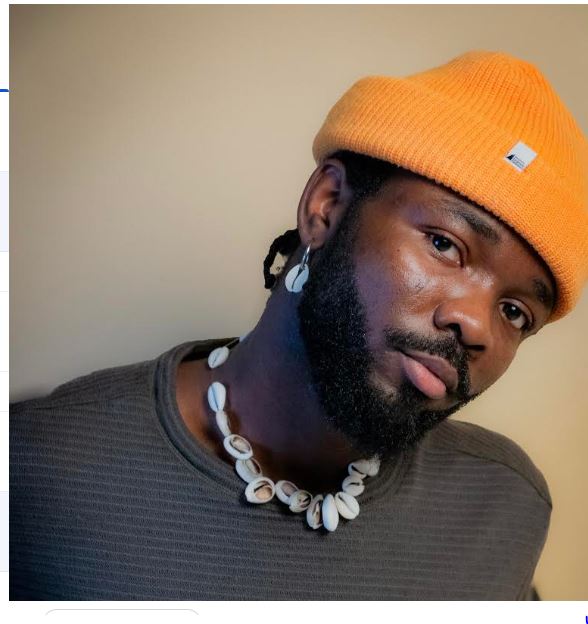
*Says, ‘Being Multi-Talented Is My Biggest Strength, Challenge’
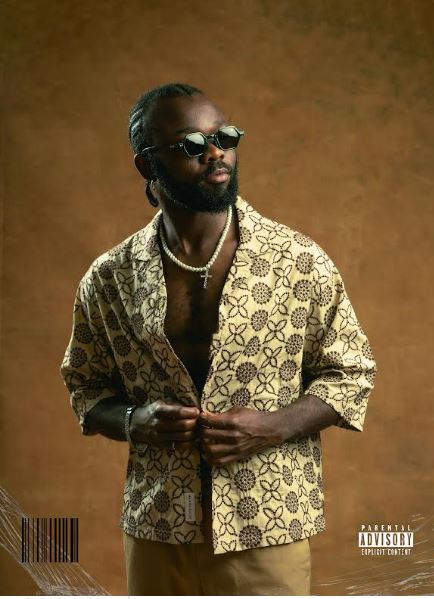
Nigerian-born, Montreal-based creative Prince Ajayi is best known as a multidisciplinary artist, but he sees himself as a storyteller and a builder who speaks different languages to imprint his name in the world of entertainment.
Ajayi began his journey as a musician more than two decades ago, before venturing into dance, film making, directing and entrepreneurship. Today, he cannot be boxed into a particular genre. He is like a free spirit moving from one genre to another, almost impossible to separate from them. In this exclusive interview, he shares the amazing story of his journey into the world of music, dance, film, choreography, photography and entrepreneur. He also talks about his biggest challenges breaking into global space as a multi-talented artist.
You are Nigerian-born and now based in Montreal. How has that dual identity shaped you as a multidisciplinary creative?
Nigeria gave me my foundation. Montréal expanded my vocabulary.
Growing up in Nigeria, especially Lagos, creativity is almost everywhere — music, language, fashion, humour, movement, even the way people communicate. There is also a resourcefulness you develop. You learn to create even when you don’t necessarily have everything you think you need.Montréal introduced me to another kind of creative environment. It’s incredibly multicultural and has exposed me to different approaches to cinema, contemporary art, music and collaboration. Living between those influences has made me less interested in choosing one cultural identity over another.
I can create something with Yoruba or Nigerian Pidgin expressions, French influences, African rhythms and a visual language influenced by North American cinema, and to me that isn’t confusion. It’s an honest reflection of the life I’ve lived.
Nigeria gave me roots. Montréal gave those roots another environment to grow in.I think my work becomes most interesting where those worlds meet.
At what point did you realize you didn’t want to be boxed into just one art form?
I don’t think I ever woke up and decided I wanted to become “multidisciplinary.” Looking back, one creative language simply kept introducing me to another.
Music actually came first. I started writing songs around JSS3, approximately 2003–2004, before I even knew I could dance. I had a notebook containing around 15 songs, performed some with my peers, recorded about three songs on CD and participated in rap and music competitions. At one point, I participated in Sprite Triple Slam, where I got the attention of eLDee, who was one of the judges. Then life took an unexpected turn. I was preparing to study aeronautical engineering in England, but I couldn’t secure the visa after a last-minute financial requirement changed those plans. Around that period, a friend in my neighbourhood introduced me to KRUMP. It was the first dance style I seriously attempted. Curiosity became commitment.
Dance eventually became a major professional chapter of my life. I had opportunities to grow around people who helped shape Nigeria’s modern dance and entertainment industry, including working with Kaffy and Dr. Shefau — first as a performer and later taking on choreography responsibilities. That journey took me onto major stages and productions. I performed and choreographed around platforms such as The Headies and Rhythm Unplugged, and was part of major entertainment moments including Dare Art Alade’s show around Ciara’s visit to Nigeria. I also participated in the ‘Dance with Peter” reality television competition and, over the years, performed on stages alongside artistes including Wizkid, 2Baba, Runtown and Yemi Alade.
Then dance introduced me to filmmaking. I became curious about how movement was captured, which led me to cameras. Cameras led to editing. Editing led to cinematography and directing. Eventually, entrepreneurship came from wanting to create infrastructure around all of those ideas.
So when people call me multidisciplinary today, it sounds like it was a strategy.
It wasn’t.It was evolution.
Every discipline entered my life because the previous one asked me a question I couldn’t answer without learning something new.
How would you describe Prince Ajayi to someone who has never encountered your work?
I would say Prince Ajayi is a storyteller who happens to speak several creative languages. Sometimes, that language is music. Sometimes it’s cinema. Sometimes it’s movement, photography, editing or creative direction. But underneath all of them, I’m fascinated by the same question:
How do you make somebody feel something?
I’m also interested in building, not just creating. That’s probably where the entrepreneur in me comes from. I don’t want someone to encounter one song, film or photograph and assume that’s the entirety of Prince Ajayi. I’m building a body of work and, eventually, a world where all those disciplines connect. If I had to simplify everything I do into one sentence, I would probably say: I build stories, experiences and worlds — I just don’t believe they all have to come in the same format.
As a recording artiste, what story are you telling with your sound right now?
Right now, I’m telling a story of movement, identity and rediscovery.
What’s interesting is that I’m not discovering music for the first time.
I’m returning to it. I started writing music more than two decades ago, before dance and filmmaking became major parts of my life. So I’m returning to music carrying all those years of experience with me.
That’s why I don’t necessarily want my sound restricted by one genre.
There will be Afrobeats and African influences because that’s naturally part of me, but there will also be storytelling, movement, cinematic ideas and sounds influenced by the different cultures and places I’ve experienced.
With “Waka Waka” for example, the energy is playful and immediate, but movement also represents something much bigger in my life.
I’ve moved between countries, careers, disciplines and different versions of myself.So, if there’s one story I’m telling right now, it’s probably this:
You can return to an old dream without returning as the old version of yourself.
How do you blend your Nigerian roots with Montreal’s creative scene in your music?
I don’t sit down and calculate percentages — 60 percent Nigeria, 40 percent Montréal. It happens naturally because they’re both part of my everyday experience.
Nigeria is in my rhythm, expressions, humour, storytelling and the way I understand music culturally.
Montréal surrounds me with French, English and communities from Africa, the Caribbean, Latin America and so many other places. That naturally finds its way into my music.
I’m experimenting with original lyrics, phrases and expressions across English, French, Spanish, Yoruba, Bini and, of course, Nigerian Pidgin English.
But I don’t want different languages thrown into a record simply so I can call it multicultural. Language itself has rhythm.
Sometimes, a Yoruba expression gives you an emotion English doesn’t. Sometimes French changes the texture of a melody. Sometimes Pidgin communicates something with a personality that disappears when you translate it.
Being Nigerian gives me a strong cultural foundation. Living and creating in Montréal gives me another window into the world. I want someone in Lagos to hear something familiar, someone in Montréal to recognize another layer, and someone somewhere else to hear something they may not completely understand yet, but still feel.
What inspires your songwriting process, is it personal experience, culture, or something else?
All of it. Sometimes, I will start with something I’ve experienced. Sometimes it’s an expression I hear, a conversation, something funny somebody says, a rhythm or even one word that refuses to leave my head. Culture obviously plays a major role. Nigerian languages and expressions are incredibly musical already, while living in Montréal constantly exposes me to different cultures and sounds. My filmmaking background also affects how I write because I tend to visualize music. I can hear a section of a song and immediately imagine the lighting, movement, location, wardrobe or what the camera should be doing. So, I’m not always writing only from sound. My songwriting lives somewhere between memory, observation, imagination, culture and rhythm.
What drew you from performing in front of the camera to directing behind it?
Curiosity — and probably a little frustration. As a dancer and performer, I would sometimes have an idea of how I wanted something to look and then realize that communicating that vision to someone else wasn’t always enough. So, I became curious about the camera.
Then I became curious about editing. Once I understood editing, I started understanding why certain shots worked and others didn’t. That naturally made me more interested in cinematography and directing. Eventually, I realized I wasn’t fascinated only by being seen. I was fascinated by deciding what the audience sees. That completely changed my relationship with film making.
As a filmmaker, what kind of stories are you most passionate about telling?
I’m drawn to human stories — identity, culture, relationships, ambition, migration, struggle, transformation and the things people carry that aren’t always visible. I’m particularly interested in African and diaspora stories because I think there are still enormous parts of our experiences that haven’t been explored with enough complexity. I don’t think African stories should always have to explain Africa to somebody. Sometimes, we should simply be allowed to exist on screen as complicated human beings — funny, flawed, ambitious, romantic, confused, successful, ordinary and extraordinary.
My film making journey has reinforced that interest. I want to make visually beautiful work, but beauty alone isn’t enough.I want the image to attract you and the humanity to make you stay.**
How does being a dancer and musician make you a better director?
Dance taught me timing before filmmaking taught me frame rates.
As a dancer, you’re constantly thinking about rhythm, space, anticipation, energy and when something should happen. Those principles translate beautifully into directing and editing.Music adds another dimension because now, I’m thinking about emotional rhythm as well.
Dialogue has rhythm. Camera movement has rhythm. Editing has rhythm. Even silence has rhythm.
And because I’ve performed myself, I understand what vulnerability feels like on the other side of the camera.
A director can know every lens in the world and still struggle to get an honest performance from a human being.
Technical knowledge matters, but directing is also about people. Dance taught me movement. Music taught me rhythm. Film gave me somewhere to put both.
You are also an entrepreneur. What business gaps did you see in the creative industry that pushed you to build something of your own?
One thing I kept seeing was incredible talent without enough infrastructure around it. You have photographers looking for spaces, filmmakers trying to assemble equipment and crews, dancers looking for somewhere to create, podcasters needing production support, independent artistes needing visuals — everybody is building separate pieces of essentially the same ecosystem.
That thinking contributed heavily to what I’m building with 361Studios in Montréal.
I don’t want 361Studios to simply be four walls people rent by the hour.
The larger vision is a creative ecosystem where production, photography, film, music, events and community can intersect. I’ve also experienced firsthand how difficult it can be to build when you don’t have access to the right resources, infrastructure or network. So entrepreneurship became another form of creativity for me. Sometimes, the thing you’re looking for doesn’t exist yet because you’re supposed to help build it.
What is the biggest challenge for an African creative trying to break through in Canada and globally?
I think one of the biggest challenges is access: access to networks, financing, decision-makers and rooms where opportunities are created. Talent exists everywhere.
Opportunity doesn’t always travel as evenly as talent does. When you’re building in a new country, you’re sometimes rebuilding social capital from zero while simultaneously learning a new industry.
Another challenge can be expectation. African creatives can sometimes find themselves encouraged to fit into a very specific idea of what African creativity should look or sound like. But Africa isn’t one sound, one aesthetic, one language or one story. At the same time, I think this generation has an incredible advantage.
Audiences are becoming increasingly global. A record created in Lagos can travel around the world. A filmmaker in Montréal can collaborate with someone in Accra. An African expression can become part of global pop culture almost overnight.Yes, access remains a challenge. But we no longer need permission from only one gatekeeper to find an audience. That changes everything.
What has been the most defining moment of your journey so far?
It’s difficult to choose one because several moments that initially looked like setbacks completely redirected my life.
Not being able to pursue aeronautical engineering in England is one example. At the time, it certainly wasn’t something I was celebrating. But around that period, I discovered KRUMP. That eventually led deeper into dance, performance, choreography, filmmaking and the creative career I have today.
There’s another recent experience that captures the full-circle nature of my journey. When I was much younger and still pursuing music, I participated in Sprite Triple Slam. eLDee was one of the judges, and I remember getting his attention during the competition.
Life moved on. Music took a back seat. I became a dancer and choreographer, performed on major stages, moved into filmmaking, worked internationally, relocated to Canada, built 361Studios in Montréal and years passed.
Then recently, eLDee put out an open-verse challenge on Instagram. I participated. He heard my verse, connected with what I did, and that has now led to my participation in an official remix release. For me, that means much more than simply being featured on a record.
Someone who encountered me during one of my earliest music chapters crossed paths with me again after life had taken me through all these other disciplines and the thing that connected us again was music.
There have been many milestones in between: working with people I admired, performing and choreographing on major Nigerian stages, participating in Dance with Peter, building internationally, seeing my filmmaking recognized and eventually creating 361Studios.
But perhaps the defining lesson is bigger than any individual achievement.
Nothing was wasted.
The music, dance, competitions, filmmaking, setbacks, travelling and entrepreneurship looked like separate chapters while I was living them.
Now they’re beginning to look like one story.
What misconceptions do people have about you when they see “multidisciplinary” on your profile?
Sometimes, people assume multidisciplinary means you haven’t figured out what you want to do.
And honestly, I understand why.
There is a difference between doing many random things and having multiple disciplines serving one vision.
For me, music, dance, film, photography and entrepreneurship aren’t unrelated careers.They constantly feed one another.
Dance influences how I direct. Editing influences how I structure stories. Music affects how I understand pacing. Photography affects composition. Performing helps me communicate with talent. Entrepreneurship determines whether some of those creative ideas can become sustainable. So when somebody asks me, “But what do you actually do?” I understand the question. My answer is becoming increasingly simple: I build stories, experiences and worlds. I just don’t believe they all have to come in the same format. I don’t think being multidisciplinary means doing everything. It means understanding exactly why the different things you do belong together.
What project are you currently working on that excites you the most?
Music is probably the chapter creating the most excitement for me right now because it feels both new and incredibly familiar. “Waka Waka” represents the beginning of formally introducing this side of Prince Ajayi to a wider audience, but I’m already thinking beyond one single. I’m developing more music, exploring collaborations and building the visual world around the records. One particularly meaningful development has been reconnecting creatively with eLDee. Years ago, when I was participating in rap and music competitions, I competed in Sprite Triple Slam, where he was one of the judges and I got his attention.
Recently, after years of building through dance, choreography, film and entrepreneurship, he launched an open-verse challenge on Instagram. I participated, he connected with my verse, and that has now developed into my participation in an official remix release. That experience reminded me of something: Sometimes, life brings you back to the beginning just to show you how much you’ve grown.
And because I’m returning to music with a background in dance, directing, cinematography, editing and storytelling, I’m not thinking only about songs.
I’m thinking about performances, films, movement, visual worlds, collaborations and experiences.
At the same time, I’m continuing to build original film and creative projects through 361Studios, so I don’t really see the different projects as competing with each other anymore. The project that excites me most is really the convergence of everything I’ve spent years learning. For years, audiences encountered different versions of me: Prince the dancer, Prince the choreographer, Prince the filmmaker, Prince the photographer, Prince the entrepreneur. Now, I’m interested in what happens when the audience finally meets all of those experiences as one complete Prince Ajayi. I’m not starting over. I’m bringing everything with me.