
Wednesday, November 4, 2026
spot_img
Home Blog Page 8

AFRIMA Officially Opens 10th Edition Entries Portal October 11

0


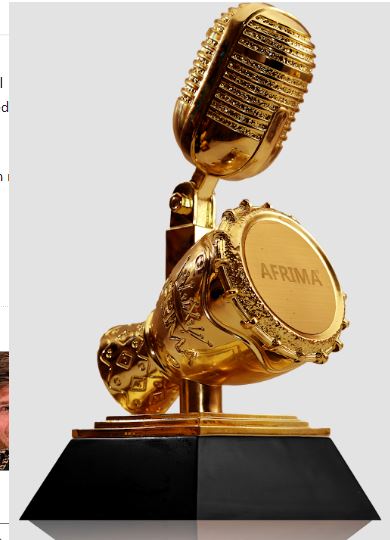
The stage is set for another major chapter in African music as the International Executive Committee of the All Africa Music Awards (AFRIMA), in partnership with the African Union (AU), officially opens the entry portal for the 10th AFRIMA on October 11, 2026, inviting artistes, creative and music professionals across Africa and the Diaspora to submit their works for consideration for 10th AFRIMA.

The awards ceremony is slated to hold from May 18–23, 2027, in Lagos. 

The entry portal opens on October 11, 2026 and will run until January 10, 2027, giving artistes, songwriters, producers, and other music professionals across Africa and the Diaspora the opportunity to compete for recognition at the 10th edition of the awards.

AFRIMA is receiving entries across 40 award categories, comprising Regional and Continental categories covering Africa’s five regions and diverse music genres. Eligible entrants include artistes, songwriters, music producers, video directors, DJs, dancers and choreographers, record labels, music executives, as well as unrecorded artistes of African origin living on the continent or in the Diaspora.

Only works produced or released within the year under review, from August 10, 2025, to January 10, 2027, will be eligible for consideration.

Entries must be submitted digitally through the official AFRIMA website (www.afrima.org) only. Submissions sent to any AFRIMA email address or through other platforms will not be accepted.

The opening of the portal follows the unveiling of the 10th AFRIMA global calendar event in Los Angeles, United States, on September 20, 2026.
The call for entries also follows a record-breaking 10,717 submissions received for the 9th edition, underscoring the growing participation of African music professionals in Africa’s global music awards platform.

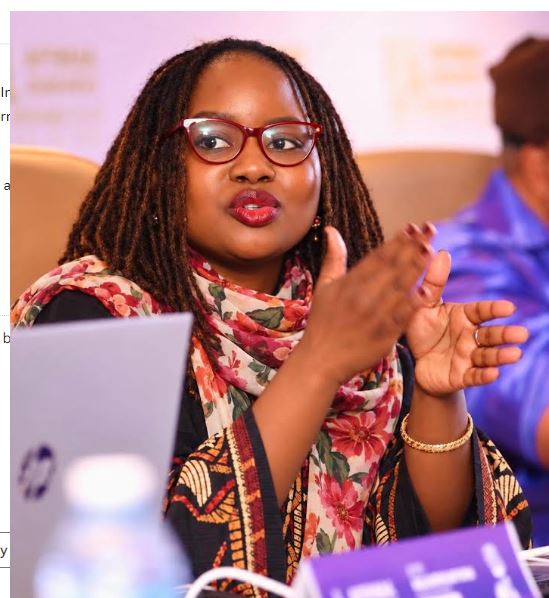
Speaking on the opening of the entry portal, AFRIMA International Jury member representing Eastern Africa, Lucy Ilado of Kenya, urged eligible music professionals to submit their works and take advantage of the platform’s continental and global reach.

“As we open entries for the 10th edition of AFRIMA, I especially encourage upcoming artistes and music professionals to take advantage of this opportunity and submit their work. AFRIMA provides a platform for emerging voices to be discovered alongside established names from across Africa and the Diaspora.

“I also encourage entrants to take time to understand the different categories and submit their work in the category that best fits it. Beyond the quality of the work itself, it is important to ensure that entries are submitted correctly, with accurate information and working links, so they can be properly considered during the screening and adjudication process,” she said.

Also speaking, Adam Tiran, a member of the AFRIMA International Jury representing Southern Africa from South Africa, said:

“The African music industry is changing rapidly. We are seeing new sounds, new collaborations, and a new generation of artistes and music professionals finding their own space in the industry. AFRIMA gives these voices another opportunity to be heard and recognised.

“I encourage music professionals from across the continent and the Diaspora to use this entry window to put forward the work they believe represents where African music is today and where it is going. AFRIMA should continue to be a platform that discovers new talent, recognises excellence, and brings the different regions of Africa closer together through music for greater global expansion and reach.”

Applicants must complete the online Entry Registration Form accurately and provide working links to their works. Audio and video submissions should be provided through downloadable or streamable links from platforms such as YouTube or SoundCloud. The submission form is available in English, French, Swahili, Arabic and Portuguese, with a Spanish translation also accessible.

Established in 2013 by the International Executive Committee of AFRIMA in partnership with the African Union, AFRIMA has grown into Africa’s biggest, most prestigious and longest-running music awards platform, dedicated to developing, celebrating and promoting African music, culture and creative talent globally.

AFRIMA’s broadcast reaches audiences in more than 84 countries, connecting millions of viewers worldwide.

 

Emeka Rollas apologizes to Regina Daniels, mother over cooments on marital crisis

0


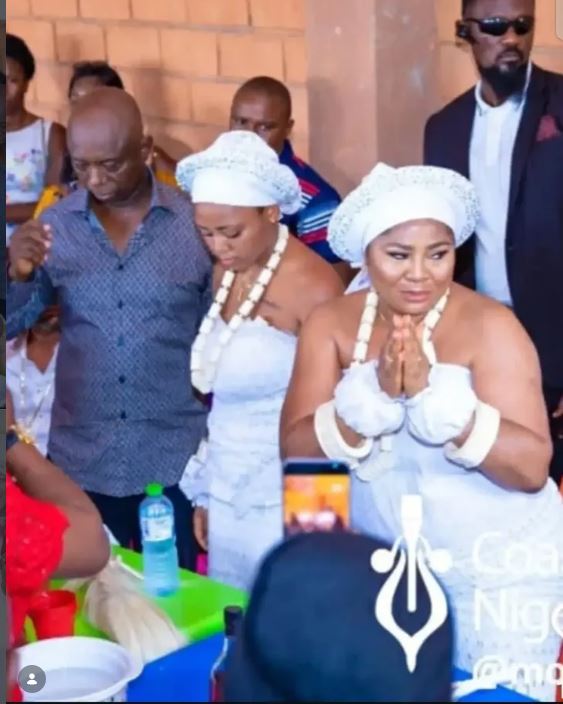
Former President of the Actors Guild of Nigeria, AGN, Emeka Rollas, has apologised to actress Regina Daniels and her mother, Rita Daniels, over comments he made during the actress’s marital crisis with her husband, Senator Ned Nwoko.

The clash began in 2025 when Regina and Nwoko’s marital problems became public.

Rollas had joined the conversation, making comments about Regina’s well-being and criticising Rita Daniels, suggesting she should focus on her daughter rather than her reported ambition to become AGN president.

His remarks angered Regina, who accused him of disrespecting her family. The disagreement later extended to allegations and counter-claims involving AGN leadership and claims about Nwoko’s financial support for the guild.

In an apology posted on Instagram, Rollas admitted that he regretted the timing and manner of his comments.

He said a recent encounter with Rita Daniels, during an attempt by others to broker peace between them, prompted him to reflect on his actions.

“I am human. I made a mistake. I have reflected. And today, I say sincerely: I am sorry,” he stated.

“Whether or not anyone chooses to accept my apology is entirely their decision. I am making it because, after looking back, I am not proud of how I handled that moment.

“Leadership is not only about having the courage to speak. It is also about having the humility to acknowledge when we could have spoken differently, waited longer, or chosen a better path.

“I may still hold my convictions about some of the issues I raised then, but I take responsibility for my actions and my timing,” he added.

Regina Daniels, however, responded by questioning Rollas’ apology, accusing him of ingratitude and financial misconduct.

Temi Nkem Receives SUV, N90m Cash Prize After Winning BBNaija Season 11

0


Big Brother Naija Season 11 winner, Temi Nkem, has taken delivery of the Hyundai SUV and N90 million cash prize that formed part of her N160 million grand prize package.

The handover ceremony was held on Tuesday at the MultiChoice studio in Lagos, two days after the 21-year-old was crowned winner of the “Show Ya Sef” edition of the reality TV show.

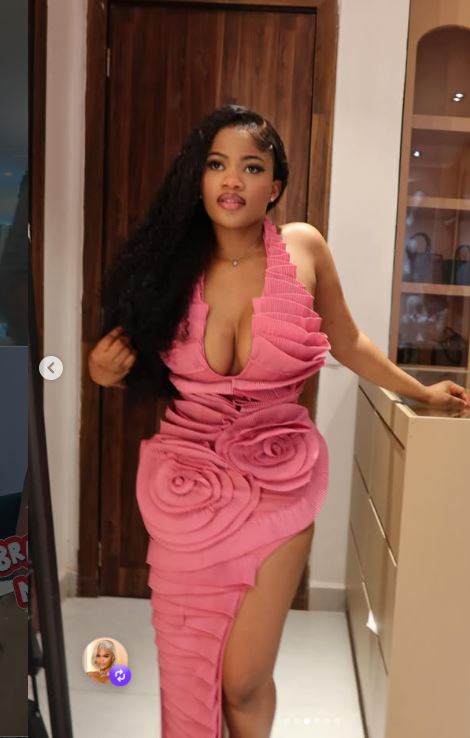
Temi, who showed up in a navy blue gown, was joined by her fellow Season 11 housemates including Aikou, Tram, Bluethopia, Araga, Oyin, Chimsom, Bells, and Yusuf.

The new Hyundai SUV was presented to her by representatives of the show’s sponsors, with the reality star later posing for photographs with the vehicle and the keys. The cash component of the prize was presented as an N90 million cheque.

An excited Temi expressed gratitude to God, her family, and her supporters, particularly members of her fanbase known as the “Teminators,” while also thanking viewers who voted for her during the 70-day competition.

She emerged victorious at the grand finale on Sunday after polling 25.87 percent of the final votes, defeating first runner-up Aikou who scored 23.68 percent and second runner-up Sheba who had 9.80 percent.

With her win, Temi becomes the fifth female winner in the history of Big Brother Naija, joining Mercy Eke, Phyna, Ilebaye, and Imisi.

The victory brought an end to 10 weeks of competition involving 24 housemates in a season marked by evictions, alliances, confrontations, romance, twists, and several memorable moments.

Temi’s journey included a fake eviction, BB Bucks drama, relationships with fellow housemates and several diary-room moments that established her as one of the season’s most prominent personalities. Her outspoken and unpredictable character kept her at the centre of conversations, while her ability to survive repeated nominations eventually took her to the finale.

The official prize package was valued at N160 million and included the N90 million cash prize, the new SUV and additional sponsored prizes.

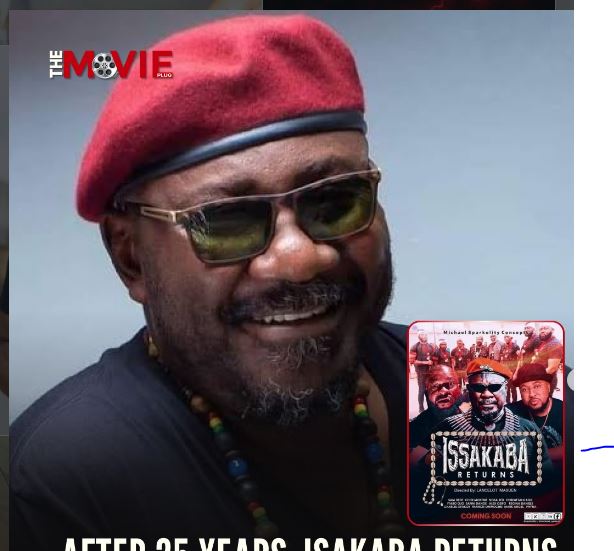
Sam Dede speaks on ‘Issakaba: The Return’

0

*Says, ‘I am emotionally affected playing the lead character’

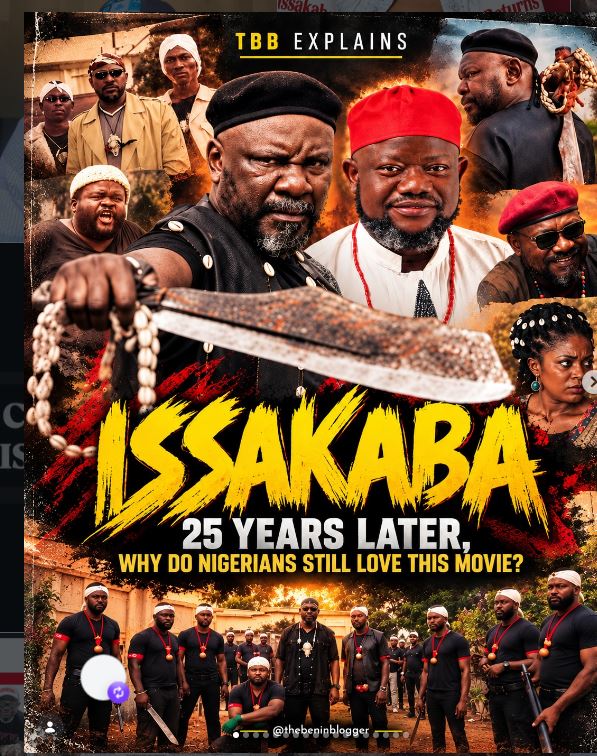
Two years after filming the reboot of “Issakaba:The  Return”, the action-packed thriller initially produced by the late Chukwuka Emelionwu and directed by Lancelot Imasuen in 2001, the movie is set to hit cinemas nationwide on November 13. The film was shot in Asaba, Delta State in 2024. Seasoned actor and scholar, Sam Dede, popularly known as Sam Dede, who played the lead character Ebube, shared his excitement about reprising the role. In an interview, conducted two years ago, Sam Dede  decried that the evil the Issakaba boys fought against 25 years ago is still present till date. He also challenged Nigerian filmmakers to make more films that address the country’s social problems rather than churning out what he described as “senseless love stories.” The veteran actor further spoke about his passion for grooming talents and why he is often cast in tough roles, among other things.

25 years ago, you played Ebube in the action-packed thriller, Issakaba and you are playing again. What is so new about this role?

It’s more like a call to duty. Again it’s telling us that those youth Issakaba against have not changed. They are still here with us. They are even taking a stronger dimension. Before now, we were dealing with armed robbers, but the dimension of kidnapping, ritual killings have become stronger than those things we dealt with 25 years ago. It’s a call to serve our community and ‘Issakaba’ overtime has become like a metaphor for justice , a metaphor for fighting against the crimes in society. So, we are back to fight against these crimes again. And we hope that the viewers will get to understand what we are back to fight against now.


When you were invited to play the role again, what was your reaction?

I feel it’s an opportunity for us to remind ourselves that nothing has changed. Rather, those who sacrificed their lives for society have forgotten. Look at these Issakaba boys who sacrificed their lives to bring sanity to society . There’s a scene where some of them died due to lack of medical facilities. It’s quite a touching role to play. This time, we are coming back with so much anger, we are coming with the spirits of all the Issakaba boys who were killed in the line of duty. They seemed to have given their blood and sweat for society and gained nothing in return. It’s not like they asked for anything. They are even treated like outcasts, forgotten heroes. Nothing has changed and more than anything else, we are trying to restore sanity to our homeland. We need to move away from the shameless politicians to save the country. It”s a duty call to everybody to realize that fact. We have to take responsibility for our destiny.

The remake of Issakaba also reminds one of the role you played in the ‘Last Burial.’ Why are you always playing tough roles in movies?

This is one character that affected me emotionally. In many ways, I have to see myself in that character because you can easily relate with those crimes and heroes of society that the Issabaka group is fighting against. So, very easily I relate with those things and I just wish that one way or the other, some groups will stand out to fight against these ills of society. I don’t think we should wait for the government to do this for us. It’s beginning to look like we are in a no-headway-situation. Nobody seems to have a solution to the insecurity challenges in this country. But ‘Issakaba’ is a story of a small group of 10 to 11 men, they may have spiritual backing. We must begin to look for alternative solutions to the insecurity challenges in Nigeria. It’s getting out of hand.

On why I always play tough roles in movies, there is no role I cannot play. But I think people prefer to see me play such roles in action movies, especially after the role I played in “Blood Money” about 30 years ago. By the time we finished producing ‘Issakaba’ in 1999, everybody wanted me to play those tough roles in movies. Many people . However, many people do not remember that I started as a director in Nollywood, working with the late Chico Ejiro, Fred Amata and Opa Williams. But people prefer to see me in front of the camera, instead of working behind the camera. It just became a trend and I embraced it. So, I am an actor, I do less of directing and production,

You are also a lecturer, how do you combine all these?

We just try,but the most important thing is to wish one good health. If you have good health , you have everything and what you need now is that extra energy to do other things. More than anything else , I function more as a lecturer. I enjoy training people, I enjoy seeing my students grow and becoming prominent figures in the industry. Actors like Rita Dominic, Monalisa Chinda-Coker, Bob-Manuel Udokwu, Francis Duru including Lancelot Imasuen. I feel very fulfilled when I see any of my students directing, while I am on set.

Do you think we should focus more on producing movies like Issabaka that deal with the ills of society?

My thinking has always been we need to do more movies that address social issues. We have to do more, and I have always said the theme may be the medium that will tackle social issues. Insecurity is becoming a way of life in the country. Why are we not addressing that in our films? Now, we are facing food shortage in Nigeria and nobody is writing a script to address that issue. All those senseless love stories must be put aside now. We have a task as creative people to use our crafts to address these social problems that we are facing in this country.

CANEX 2026 WILL CREATE INVESTMENTS, JOBS, PARTNERSHIPS BEYOND THE SHOWCASE – MUSAWA

0
The Federal Government says the upcoming Creative Africa Nexus,(CANEX, 2026 will create tangible investments, jobs and business partnerships beyond showcasing talent.
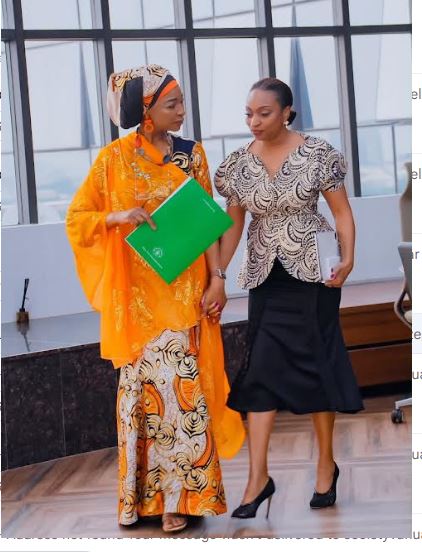
The  Minister of Art, Culture, Tourism and the Creative Economy, Hannatu Musa Musawa, disclosed this,at a joint Ministerial briefing on Nigeria’s preparations to host the CANEX WKND, held at the ITF Skills House, Maitama.
Musawa described CANEX as a strategic economic platform for interconnectivity and growth, and the largest creative economy platform the Ministry will jointly host with other stakeholders to project Nigeria’s creative capacity to the world.
She said President Bola Ahmed Tinubu, GCFR, created the Ministry of Art, Culture, Tourism and the Creative Economy for the first time in Nigeria’s history because he recognised that the sector, which had grown organically on its own for years, needed deliberate government structure to unlock its full potential.
According to her, while Nigerian music, film, fashion and heritage have already established the country as a global creative powerhouse, the mandate of government is to provide the enabling environment that turns that talent into economic prosperity.
“This is a shared responsibility. It is not the responsibility of one ministry. We are working together with the Ministry of Industry, Trade and Investment and Afreximbank because we cannot deliver Mr. President’s vision of economic diversification alone,” she said.
The Minister said the choice of the Wole Soyinka Centre for Culture and the Creative Arts (National Theatre) as venue, almost 50 years after FESTAC ’77, is symbolic.
“While FESTAC put the Black community on the global map, CANEX will build on that legacy to reaffirm Nigeria as Africa’s cultural and creative capital. The summit will showcase not only Nigeria’s creative content but also the infrastructure and reforms being put in place to help the industry scale,” she said.
Musawa also paid tribute to Professor Benedict Oramah, President of Afreximbank, for his commitment and support for Africa’s creative economy.
In her remarks, the  Minister of Industry, Trade and Investment, Dr. Jumoke Oduwole, MFR, said CANEX is a platform for trade, investment, enterprise and market access.
She said Nigeria is positioning its creative industries as part of its broader trade and export agenda, noting that as global trade shifts from physical goods to services, technology, content and IP, Nigeria must capture more economic value from its creative dominance.
“That means connecting our creators and creative businesses to finance, investors, distribution, technology and international markets. CANEX must translate connections into transactions,” she said.
“We want to see partnerships formed, financing mobilised, intellectual property commercialised, businesses entering new markets and Nigerian creative enterprises scaling beyond our borders. That is how we will measure the real impact of platforms such as CANEX,” Dr. Oduwole added.
She noted that delivering CANEX requires a whole-of-government approach involving Ministries of Art, Culture, Tourism and the Creative Economy, Finance, Customs, Immigration, payments and financial services, as well as the Central Bank of Nigeria and the Wole Soyinka Centre for Culture and the Creative Arts.
CANEX, an initiative supporting Africa’s creative industries, will be held from Nov 5-8, 2026 at the Wole Soyinka Centre for Culture and the Creative Arts, Lagos.

Light Cinema Africa Festival Returns After Six Years In Lagos

0
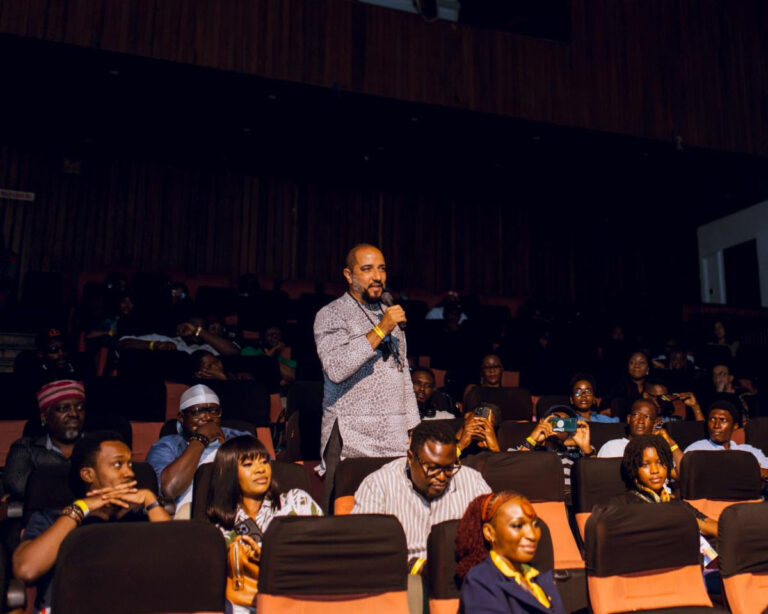
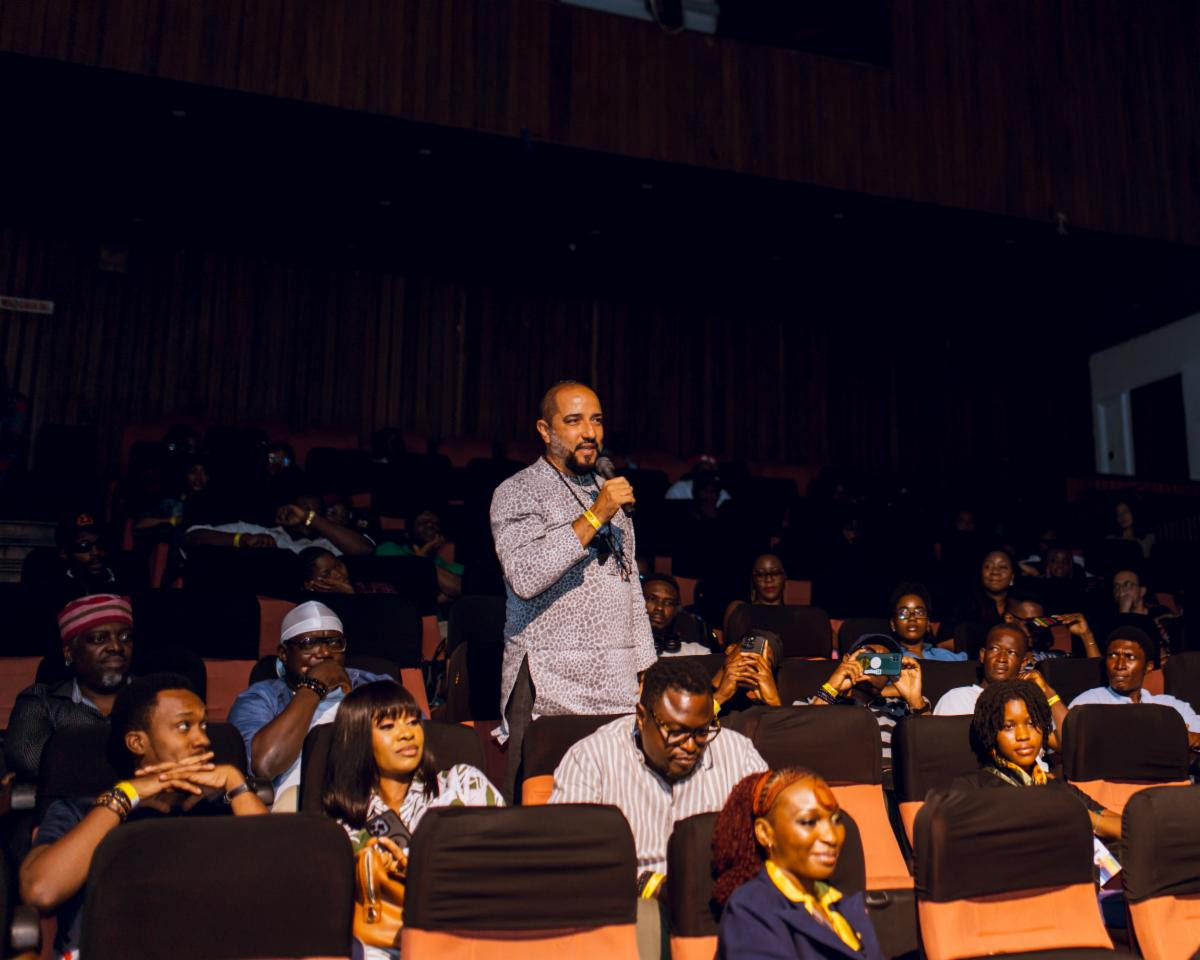
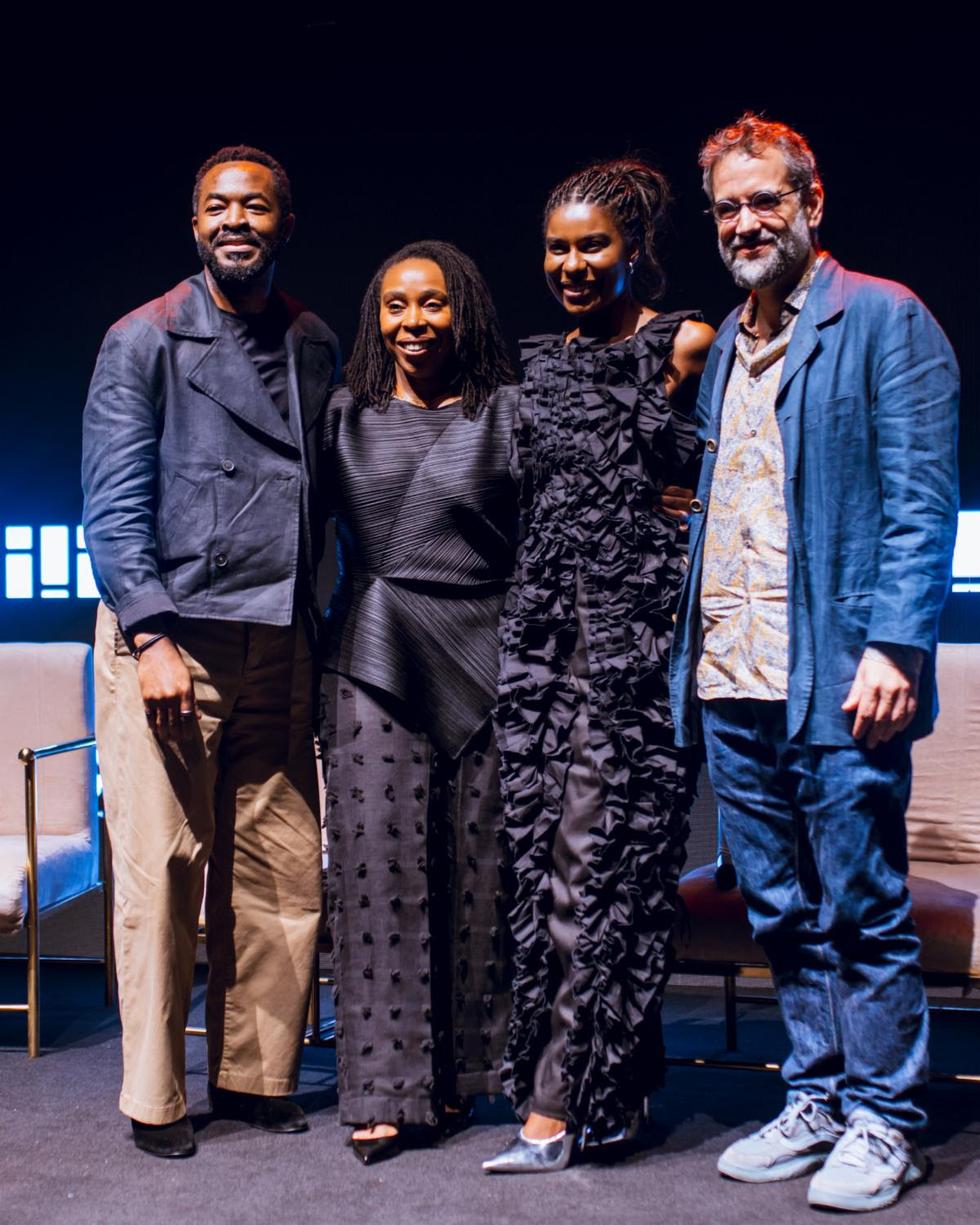
After six years away, Light Cinema Africa, LCA, has returned with three days of films and performances.
The festival, held at MUSON Centre, Lagos, felt like both a homecoming and a renewal — a gathering of like minds.
From the opening screening of ‘Shine Your Eyes’ to the films, conversations and Q&As that followed, each day brought something different into the room: new stories, familiar faces, questions, laughter, unexpected encounters — and exchanges that carried on long after the screen went dark.
According to the organizers, it felt so good to gather again.
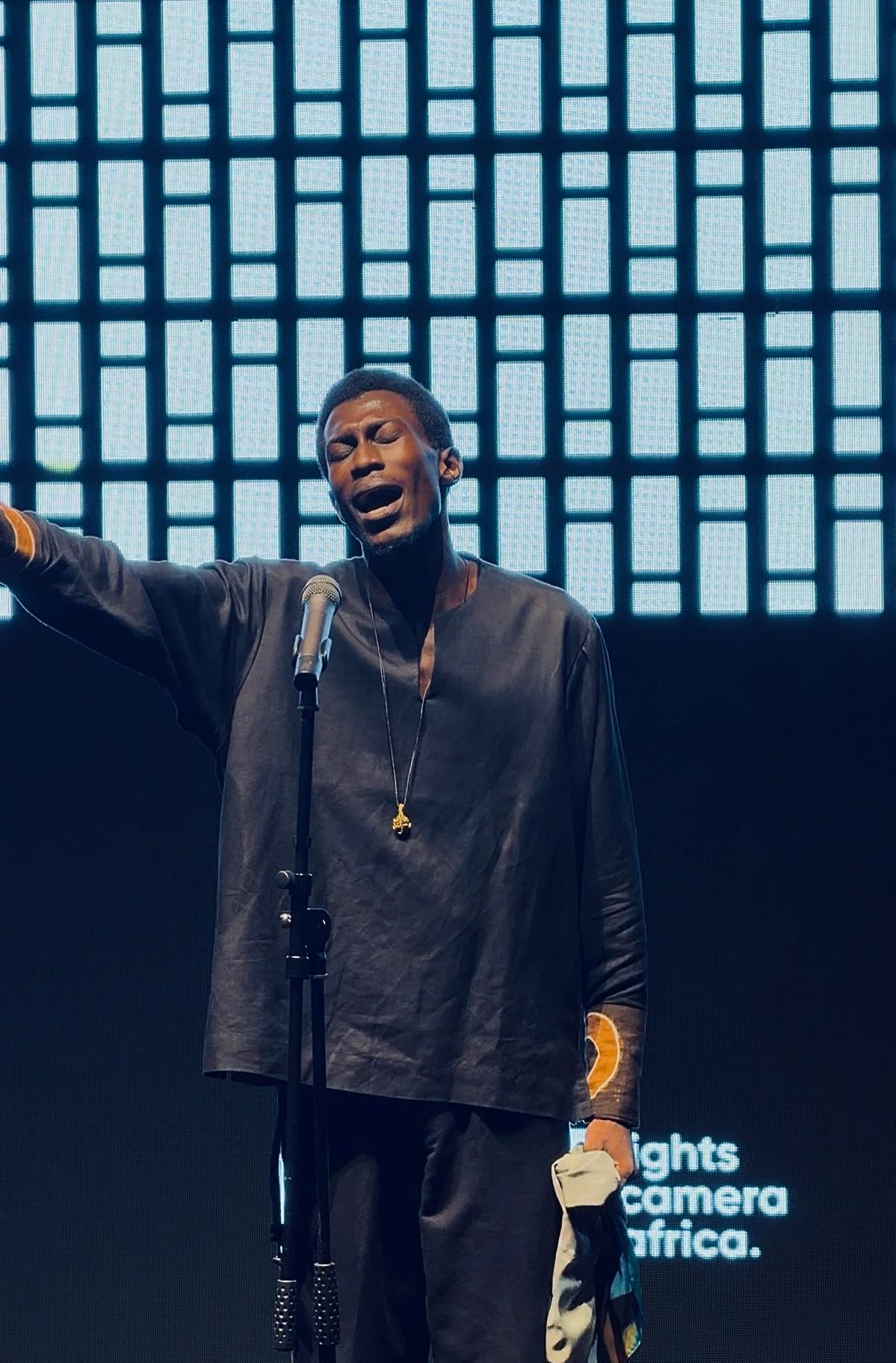
The festival featured a special performance by Obree Daman from Senegal, whose powerful performance climaxed the event.
Closing the festival, the founder, Ms Ugoma Ebilah, thanked participants from far and near for honouring the event.
“We are grateful to the filmmakers and artists who shared their work with us, and to the guests and collaborators who supported this return in so many ways.
“We are particularly grateful to those who travelled to Lagos to join us, and to all who contributed their work, Matias Mariani, Indira Nascimento, OC Ukeje, Chika Anadu, Nze Ed Emeka Keazor, Oba Kosi Nwoba, Praise Odigie Paige, Akinola Davis Jr., Kachi Benson, Remi Vaughan-Richards, Kagho Idhebor, Ifeyinwa Arinze, Emma Edosio Deelen, Lala Akindoju, Chioma Onyewe, among others. After six years, we gathered again, we keep going,” she said.

From 24 hopefuls to Winner: How Temi Nkem won BBNaija ‘Show Ya Sef’ 

0
From her unapologetic Day 1 entrance to her dramatic diary sessions, 21-year-old Temi Nkem went from one of 24 hopefuls to the winner of Big Brother Naija Season 11 grand prize of  and the ₦160 million.
Wake up a Terminator anytime, anywhere and they’ll probably tell you one thing: the money is entertaining.
That became more than a fan slogan for Temi Nkem. It summed up the personality that carried her through the Show Ya Sef house, loud when she needed to be, playful almost all the time, unpredictable and rarely far from the centre of the action.
Temi Nkem Chigbue, a 21-year-old Accounting and Finance student born, who was raised in London, entered the house as one of 24 housemates chasing the ultimate prize. Ten weeks later, she walked away as the winner of Show Ya Sef, claiming the ₦160 million grand prize package, which includes ₦90 million in cash and a brand-new SUV. The finale took place on Sunday, October 4, amid celebration and  surprises.
An unapologetic beginning
Temi Nkem entered the house saying she represented exactly what the show needed: someone bold, vibrant and impossible to ignore. It did not take long for her to prove it.
On the very first night, she read the house’s wager brief. When some housemates complained that they struggled to understand her UK accent, Temi Nkem did not shrink herself to make anyone more comfortable. She stood her ground.
It was a small moment in a very long season, but it immediately offered viewers a glimpse of what was to come.
Gbas gbos and standing her ground
Being one of the younger housemates did not stop Temi Nkem from confronting situations head-on. From her clash with Flora and Oyin over the “local birds” comment to her heated moments with Keivo and other housemates, she regularly found herself in the middle of conflict. But she was rarely afraid to say what she thought.
No immunity, no easy ride
Throughout the season, Temi Nkem never enjoyed individual immunity. She was not saved by the house, nor did she win MIPOW, leaving her exposed to the public vote again and again. That only changed when Barry used his Ultimate Veto Power to choose Immunity for All, securing every remaining housemate a place in the finale.
Constantly facing possible eviction could take a mental toll, but Temi Nkem kept returning to the game without losing the personality that made her stand out.
connection with Keivo in the house
Her connection with Keivo was one of the first to draw attention. He would make her bed and even tuck her in at night, but things became complicated after Temi Nkem shared a steamy kiss with Tram while Keivo was around.
Araga and Goddessa later became her “parents”, while Sheba became “Aunt Shibi.” After Araga and Goddessa were evicted, Temi Nkem and Sheba grew even closer.
No dull moment
In the diary room, she could turn an ordinary conversation into an event. On one memorable occasion, Biggie had to start counting down just to get her to leave. When housemates had to make their cases to Barry for the Ultimate Veto save, Temi Nkem threw herself into it. In the final week, when finalists had to campaign directly to viewers, she was on the floor again, literally rolling as she pleaded her case.
And then there was the BB Bucks heist. Temi Nkem quietly collected other housemates’ BB Bucks until Tram exposed her operation. Instead of crumbling, she owned it. The irony came later when the stash she had taken from others was itself stolen.
Even her relationship with custard became a recurring storyline.
She could compete too
Her victory in one of the Friday Night Arena Games gave her a major individual win, while Wager presentations regularly allowed her to show another side of herself. Whenever she was given a character to play, Temi Nkem committed to it fully.
Why the crown found Temi Nkem
She could be playful one minute and confrontational the next, dramatic in the diary room, sentimental with her friends, calculating over BB Bucks and completely unserious over a bowl of custard. There were layers. Through it all, she remained unapologetically herself. That combination of entertainment, vulnerability, conflict, humour and unpredictability kept her firmly in the Show Ya Sef conversation until the very end.
Temi Nkem now becomes the fifth woman to win Big Brother Naija, joining Mercy Eke, Phyna, Ilebaye and Imisi in the winners’ circle.

Doris Ogala Defends Association With VDM, Calls Out Those Who Bullied Her

0
Nollywood actress and African Action Congress, AAC, governorship candidate in Abia State, Doris Ogala, has defended her continued association with social media personality, Martins Vincent Otse, popularly known as VDM.
Ogala made this known in a statement shared on social media, where she addressed individuals she accused of previously humiliating and bullying her.
The actress-turned-politician alleged that some individuals had “ganged up” against her and questioned whether they considered how she felt when they called for her disqualification.
She said she followed due process and questioned why she was treated like an outcast despite meeting the requirements.
“I know all of you by name. No one should provoke me further else I will remind you how you humiliated and bullied me,” Ogala said.
She also questioned the opposition she faced, saying: “Did you care how it felt when you said Doris should be disqualified, you all ganged up against me.”
Ogala, who did not specifically name the individuals she was addressing, further defended her association with VDM, insisting that nobody had the right to dictate who she maintains a relationship with.
Meanwhile, Uche Ogbodo has spoken about her relationship with Doris, saying she is privileged to know who she is and that she doesn’t support people because of noise.
She continued by saying Doris understands that leadership is not just about sitting in the office but understanding people and having them at heart.
“I have known Doris Ogala for over 18 years, and I can confidently say that she is a woman of strength, courage, resilience and determination,” Ogbodo said, adding “I see you, I believe in your journey, and I am proud to stand beside my friend of 18 years.”

2027: Politicians must build brands early, embrace digital marketing — Mike Dada

0

Politicians preparing for the 2027 elections must begin building their public image early and embrace data-driven digital marketing to effectively connect with an increasingly young and discerning electorate.

The Managing Director of PRM Africa Marketing and Communications Limited, Mike Dada, has said.

Dada, a marketing and public relations expert, said the era when politicians relied mainly on rallies, posters, “political structures” and traditional media to reach voters was gradually fading, stressing that technology, artificial intelligence, and data analytics were changing the face of political marketing campaigns.

Speaking on the future of political marketing, Dada, who is also the Founder and Executive Producer of the All Africa Music Awards, said digital marketing had become central to modern electioneering.

“Digital marketing is no longer an “alternative” channel; it is the primary battlefield. In a world of evolving tech, digital marketing allows for micro-targeting, precision, and measurement. We can send one message to a farmer in the North and a different, tailored message to a tech enthusiast in Lagos, while maintaining the core brand essence. It provides the feedback loop that traditional media lacks. It is not the future; it is now,” he said.

According to him, political campaigns must now be built around proper assessment of the electorate, demographic and psychographic analysis, voter segmentation, and targeted communication.

He also urged politicians to treat their personal brand, records, values, and communication as components of a political brand, rather than waiting until a few months before an election to attempt to reshape their image.

Dada said political branding was more than producing attractive posters, television commercials, or social media content, adding that candidates must establish what they represent and build credibility over time.

Dada, whose company, PRM Africa, has managed 16 elections end-to-end, noted that candidates could no longer depend on repeatedly addressing the same crowds at rallies and expect to influence the wider electorate.

“Branding is not a coat of paint you slap on two months before an election.” It is a reputation built over time,” Dada said. “Define your ‘Brand Essence’ early. What do you stand for? If you wait until 2027 to tell us who you are, the opposition will tell us who you are first.”

The tech entrepreneur and lawyer said that data would also play a critical role in determining the effectiveness of political campaigns, as digital tools could help campaign organisations monitor voter sentiment and measure the impact of their messages.

“We no longer guess. We need to count the numbers for it to count. In any case, democracy is a game of numbers. Through sentiment analysis, digital footprint tracking, evaluation, consistent control, and periodic polling, we can measure the “conversion rate” of a campaign. We can see how a specific message moved a specific demographic in a specific geopolitical zone. If your marketing isn’t moving the needle in the polls or social sentiment, you know you need to pivot,” he said.

He warned, however, that digital campaigns could not replace grassroots mobilisation, stressing that online communication must be supported by on-the-ground engagement. “It is important I point out that political marketing needs to be married with push strategy, OTG – on-the-ground work – for success or for the campaign objective to be achieved,” he said.

Dada also called on governments to engage professionals in communicating their policies and programmes, arguing that implementation without effective communication could create a disconnect between government and citizens.

“Governments often treat public affairs communication as ‘propaganda’ rather than ‘engagement’. They use unqualified civil servants or ‘information officers’ to do the job of brand specialists.

“The result is a disconnect and miscommunication you see everywhere in Africa: a government is performing, but citizens feel neglected and distant.” Governments must learn that selling a policy is just as important as implementing it. Governments at all levels need to understand the necessity of investing heavily and building intangible assets such as reputation, perception, mutual understanding, and trust for the purpose of legitimacy and policy support from citizens,” Dada said.

Irewole Olaniyan Speaks On Alleged Affair With Married Man

0
*Says, ‘I Left Him Immediately I Found Out’
Nollywood actress Irewole Olaniyan has broken her silence following allegations that she is dating a married man.
The allegation was made by a woman who identified herself as Maryam Edris. She called out the actress on Instagram, accusing her of having a secret romantic affair with her husband for three years and claiming her husband had been bankrolling Irewole’s career and lifestyle.
Responding to the claims, Irewole admitted she had dated the man in question but said she ended the relationship as soon as she discovered he was married.
According to her, she had no reason to hide the relationship at the time because she did not know he was married, noting that a video of them on a date was even posted by one of the restaurants they visited.
She explained that Maryam only discovered the restaurant video a year later and reached out to her, by which time she had already left the man. Irewole added that she apologized to Maryam, who accepted her apology but remained unconvinced that she had not officially dated her husband.
In her words: “Firstly, I’d like to say thank you to family, friends and fans who have been on my corner for 24 hours since this debacle started on social media.
“I’m aware of the fact that there’s a post that has been going around on blogs since Friday, about me dating a married man.
“I’d like to address the issue this once. I am not with this said man and I haven’t been with this man since I found out he was married.
“We had a few dates and a video of us on one of those dates was made and posted by one of the restaurants. I had no issue because I was not hiding and didn’t know he was married at the time.
“I believe Maryam found out about the restaurant date a year later, and I’m glad she found out, because I had left her husband even before she reached out to me, and I did let her know that, when she reached out to me. I told her, her husband isn’t my type and apologized to her. She accepted my apology, even though she never agreed that I didn’t officially date her husband. That was the end of that.”
Toggle Dark Mode

Share with